
Greenfield Community College atrium
I was just asked why I sit where I do, and the answer is "next to the outlet when there is one!"

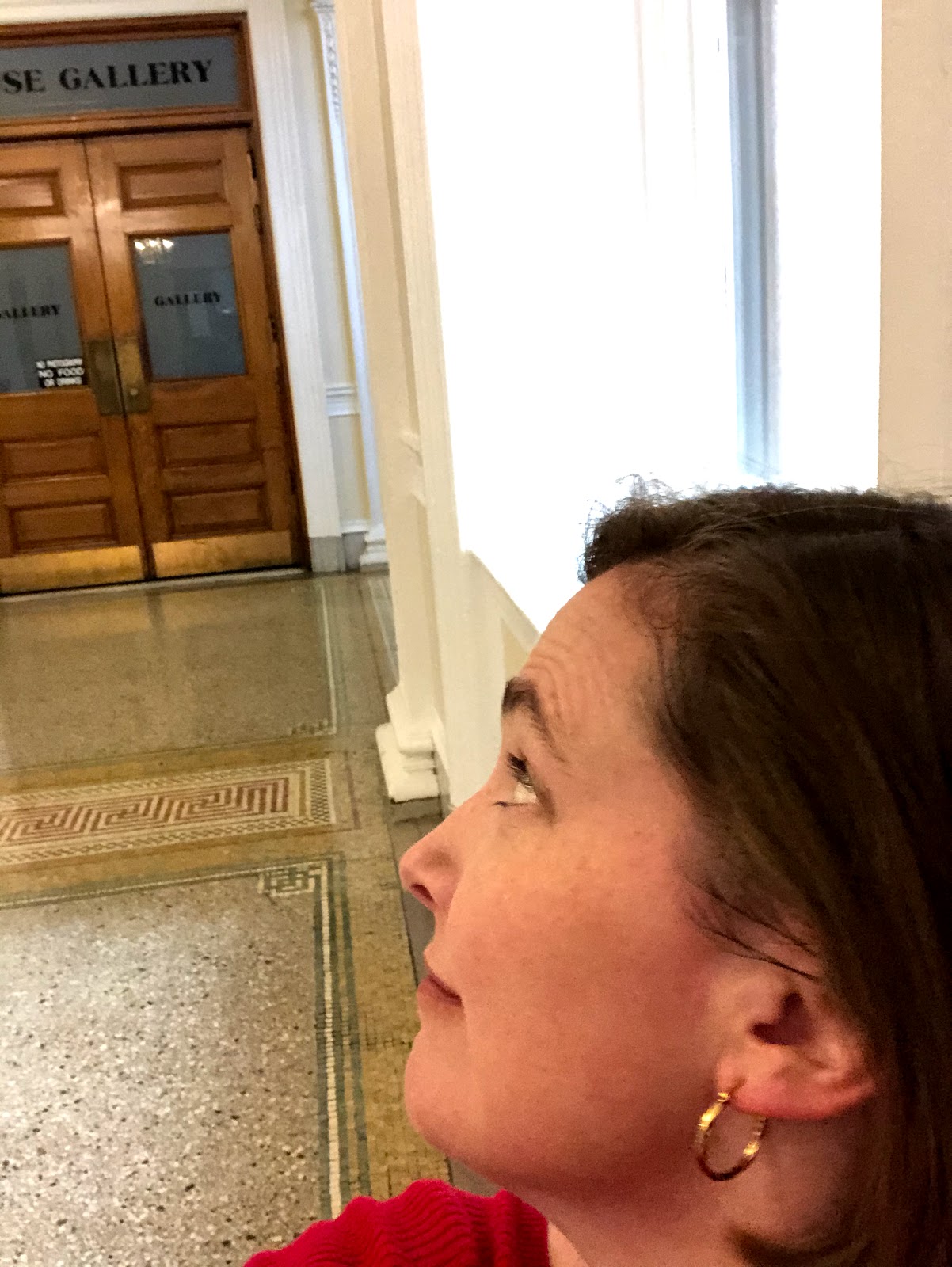 |
| awaiting the opening of the gallery |
Vanessa Calderón-Rosado, a member of the Greater Boston Latino Network, asked Chang-Diaz what accountability measures she would support. Diaz pushed back, reiterating the importance of sufficient funding.I, too, am weary of vague calls for "accountability" which never appear to amount to anything more than more calls for privatization or otherwise channeling funding away from schools that actually serve all kids.
“We know money isn’t everything,” Chang-Diaz said. “But if you give a district $50 to do a $100 job, they can have the best teachers in the world and they’re still going to struggle.”
Shana Varón, who heads the Boston Collegiate Charter School and sits on the board of the Massachusetts Association of Public Charter Schools, said she would like to see more accountability measures and said she is concerned that many in Massachusetts are advocating against the state’s standardized testing regime.
Sen. Jason Lewis of Winchester noted that accountability measures are already in place, implemented as part of the 1993 Education Reform Act.
“We put very strong accountability measures in place in 1993,” said Lewis, who is Senate chair of the Joint Committee on Education. “We backed that up with tests. What we haven’t done is deliver the funds for schools to do their work.” Chang-Diaz noted that the accountability measures put in place in 1993 were enhanced in 2010.
“We have a system for more rapid intervention when we don’t see progress on the achievement gap or school performance,” she said. “The state can step in and take over a district.”
Other than the governor’s call for withholding funds and enhanced interventions, Chang-Diaz said, she hasn’t heard calls for specific additional accountability measures.
“Show me your version of what accountability is,” she said in her response to Calderón-Rosado. “Maybe we’ll agree.”
But with the clock running down on the state budget deliberations, Chang-Diaz said, legislators would have to agree on such measures on an accelerated timeline.
“I don’t want us to go another school year while we dither and talk about accountability,” she said. “Bring your proposal forward.”

